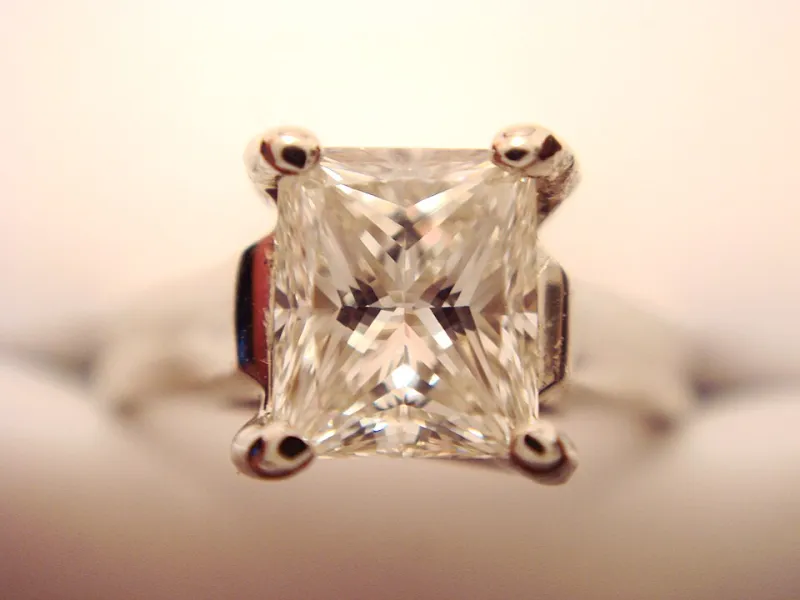
Looks Real on Camera: The Hidden Trade of Making Diamonds Read on Your Phone
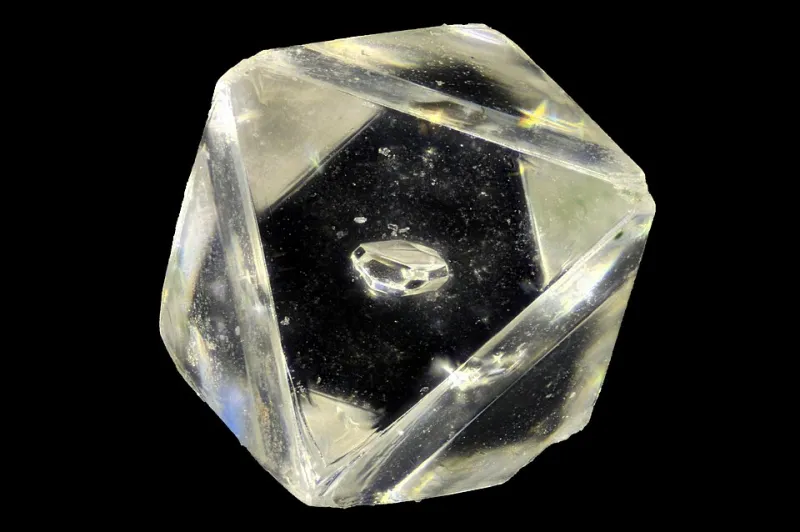
Photo: Giuliofranzinetti, CC BY-SA 4.0, via Wikimedia Commons
The first thing you notice in a good live jewelry show is not the ring. It is the light. A softbox here, a strip light there, a macro lens hovering inches above a stone that looks, on your phone, roughly the size of a dinner plate.
Welcome to the ring light economy. In 2026, selling diamonds on camera is its own craft, and the people who do it well are part photographer, part appraiser, part stage manager. They are hired by jewelers, auction houses and independent sellers to make stones read accurately on a screen — or, depending on who you ask, to make them read better than they should.
The Ring Light Is the New Loupe
A decade ago, most US shoppers judged a diamond in a store under controlled lighting. Today, a growing share first see a stone through a phone. Live-selling platforms, Instagram drops and TikTok Shop streams have turned the buying process into entertainment, and the camera has become the first loupe.
That shift created a niche. Macro photographers who once shot food or sneakers now shoot inclusions. Lighting specialists build portable setups that fit in a carry-on. Appraisers are asked to appear on camera, certificate in hand, explaining why a stone faces up white or warm.
'You have about four seconds to show honesty,' says Renata Silva, a Miami-based jewelry photographer who works with live sellers. 'If the light is lying, people can tell eventually. Then they return the ring and you lose the customer.'
What the Macro Shooters Actually Do
The technical work is more involved than it looks. A good setup uses diffused light to reduce hot spots, a macro lens to show facet junctions, and a color-calibrated background so the stone's tint reads correctly. Photographers shoot video at multiple angles and often include a neutral gray card or a known reference object in the frame.
The goal is not to make the diamond look expensive. It is to make it look like itself. That distinction matters because phone cameras are aggressive. They sharpen, saturate and brighten automatically. A one-carat stone can look two carats. A faint brown tint can disappear. A feather inclusion can vanish into compression.
'A raw phone shot is not evidence,' Silva says. 'It is a rumor.'
The Gap Between Sparkle and Grade
This is where the tension lives. A camera-ready stone is not necessarily a well-graded stone. Brilliance can be staged. Fire can be exaggerated with colored lighting. A seller can tilt a stone so the worst inclusion hides behind a prong.
Appraisers say the most common problem is not outright fraud but selective presentation. The stone is real. The certificate is real. The video is just flattering enough to make the buyer skip the fine print.
'We see people paying for a grade they did not fully understand,' says Jonathan Pace, a gemologist and appraiser in Philadelphia. 'They saw a beautiful video. They did not see the fluorescence, the feather, or the fact that the stone was recut.'
Red Flags in a Live Show
Not every stream is a scam. Many sellers are transparent, show certificates on camera and invite questions. But buyers should watch for a few recurring moves:
- Lighting that changes dramatically when the stone moves.
- No certificate number shown clearly on screen.
- A host who rushes past questions about clarity or fluorescence.
- 'Today only' pricing that discourages a second opinion.
- No return policy or a very short window.
Pace recommends asking for a static, well-lit video on a white background, plus a clear shot of the certificate and the stone's measurements. 'If they cannot provide that,' he says, 'walk.'
What to Demand Before You Buy
For US shoppers, the basics still apply. Ask for a report from a recognized lab for higher-value stones. Confirm the return policy in writing. Get an independent appraisal if the purchase is significant. And remember that a video is a sales tool, not a grading report.
The Federal Trade Commission has long required jewelry advertisers to avoid misleading claims, and that applies to live streams too. But enforcement is slow, and the platform economy moves faster than the rulebook.
The Certification Arms Race
Some sellers are now advertising 'camera-verified' or 'live-graded' stones, a phrase with no universal standard. Appraisers are wary. A real certificate comes from a lab, not a ring light.
Still, the trade is not going away. The camera brought diamonds to millions of people who will never visit a jewelry store. The best sellers are learning that honesty on camera is not just ethical. It is good retention.
As Silva puts it: 'The stone has to survive the return window. That is the only certification that matters.'