She Said Yes, the Algorithm Said Cha-Ching: Inside Music's Favorite Staged Proposal Trick
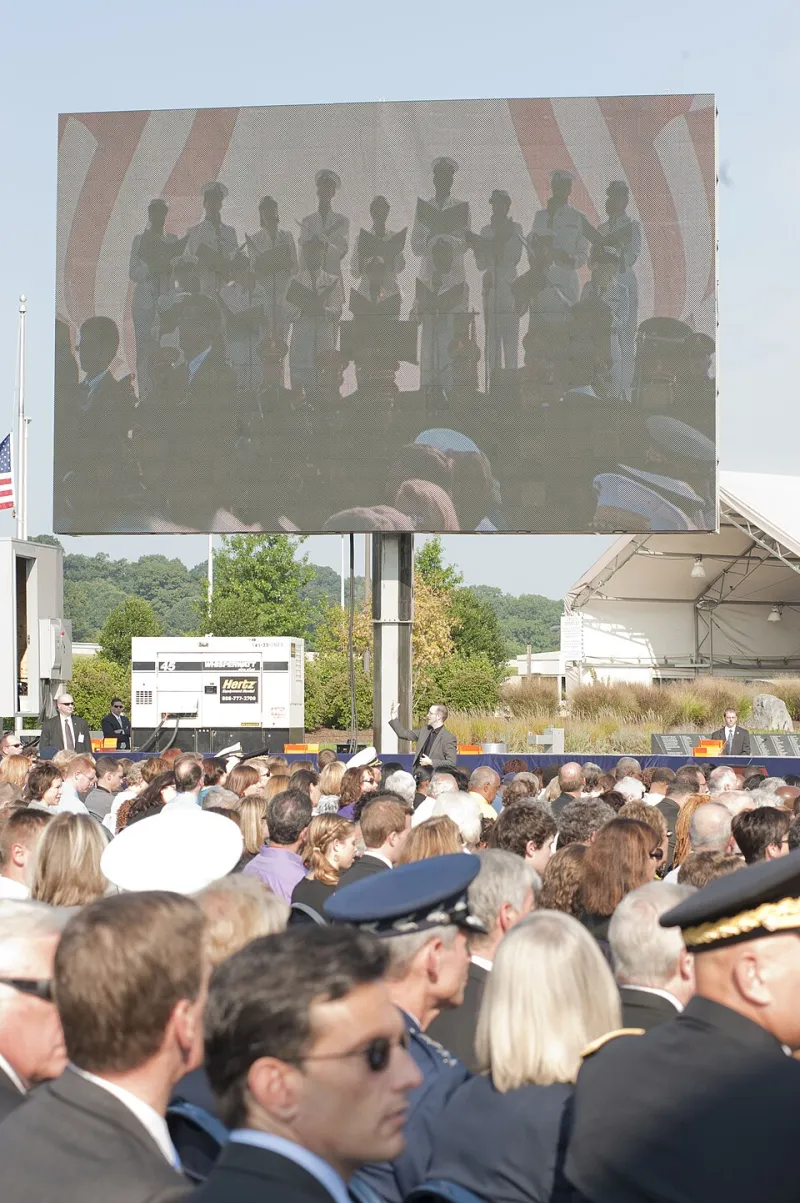
Photo: United States Navy Band from Washington, D.C., USA, Public domain, via Wikimedia Commons
Somewhere between the second chorus and the key change, a guy in a ball cap drops to one knee. The crowd screams. The artist points at the couple mid-lyric. The arena jumbotron catches the ring box. By sunrise, the clip has four million views, three brand tags, and a comment section arguing about whether it was real.
That last question is the whole story.
From Happy Accident to Playbook Item
Concert proposals have been around as long as arenas have had big screens. For decades they were organic — a fan seizing a moment, a security guard shrugging, a singer graciously pausing to say "congrats, bro." Nobody planned it. Nobody profited from it.
Then TikTok happened.
A proposal clip doesn't just live in the arena anymore. It travels. It gets duetted, stitched, set to trending audio, and dropped into feeds of people who have never heard the song playing in the background. Venue marketing teams noticed something wild: a single well-timed proposal could outperform an entire paid ad campaign. The diamond ring, it turns out, is the most efficient piece of user-generated content money can rent.
So the accidents became appointments.
The Quiet Machinery Behind the Moment
Talk to enough people in live entertainment and a pattern emerges. Some venues now maintain informal request systems for on-screen proposals — a form, a fee, sometimes a designated section where the cameras know to look. Tour managers talk about shows where the proposal was rehearsed into the setlist flow, timed to a ballad so the energy dip doesn't hurt the room.
And then there's the sponsor layer, which is where things get genuinely interesting. Jewelry brands have figured out that a proposal at a major tour stop is a three-birds-one-stone play: the couple gets their moment, the artist gets a viral clip, and the brand gets an organic-feeling association with romance at scale. Nobody in the clip says the jeweler's name. They don't have to. The caption does the work.
Labels have caught on too. An emerging act struggling to break through can get more traction from one genuinely tearful proposal video than from a month of playlist pitching. There are stories — whispered, never confirmed — of A&R-adjacent publicists nudging superfan couples toward the front row at exactly the right show.
Why It Works So Well
The mechanics are almost unfairly effective. A proposal is pre-loaded emotion, so viewers stop scrolling before they even register what they're watching. The diamond ring is the visual hook — a flash of sparkle that reads instantly, even on a six-second clip with the resolution of a potato. And the concert setting borrows credibility from the artist: this band's fans are romantic, this song is proposal-worthy, this venue is where magic happens.
Every share reinforces the artist's brand. Every repost is free advertising for the venue. Every comment asking "what ring is that?" is a lead gen tool nobody paid for.
Are Fans Wising Up?
Here's the tension: audiences are now fluent in the grammar of manufactured virality. The same viewers who eat up proposal clips will also gleefully dissect them — timestamping the camera cuts, noting that the ring box was already open, pointing out that the "random" couple has matching merch from the artist's own store.
But here's the twist — being in on it doesn't kill the moment. Reality TV trained a generation to enjoy content more when they can see the strings. A proposal that's 80% genuine and 20% produced still delivers the tears, the scream, the spark. Fans aren't demanding authenticity so much as plausible authenticity.
Some artists lean into the wink entirely, pausing mid-song to deadpan "is this a real one or a brand one?" to huge laughs. The joke works precisely because everyone knows the game is being played.
The Ring at the Center of It All
Strip away the strategy and there's still a reason this moment endures: the diamond ring is the most legible symbol in popular culture. No caption required, no translation needed. In a feed full of irony, a ring held up under arena lights is a rare piece of unambiguous content — love, commitment, sparkle, done.
That's also why it won't go away. Marketing trends burn out, but the proposal is evergreen. As long as people keep getting engaged at shows and phones keep rolling, the diamond ring bump will keep doing what it does best: turning one private yes into a few million public views.
Just don't be shocked if, next time you see one, the credits roll a little too smoothly.