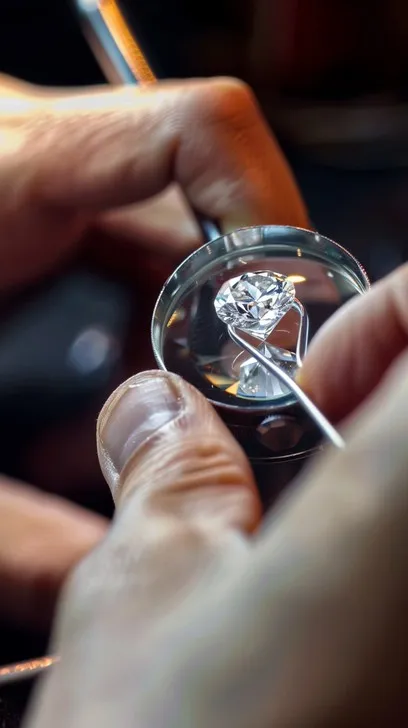
The Algorithm Knows What Your Earrings Are Worth: Streaming Data Meets the Appraiser's Loupe

Photo: W.carter, CC BY 4.0, via Wikimedia Commons
There was a time when valuing a celebrity's diamonds was a fairly boring job. You weighed the stone, checked the clarity grade, pulled comparable auction results, and wrote a number on a form. Done. The whole process lived in a quiet office that smelled like felt and old coffee.
That office now has a Bloomberg terminal in it.
Insurers, auction houses, and resale brokers across the US have quietly started folding streaming data into their jewelry valuations — and the results can be genuinely surreal. A pair of diamond earrings isn't just a pair of diamond earrings anymore. It's a pair of diamond earrings that appeared in a music video with 400 million plays.
Provenance Used to Be a Museum Word. Now It's a Metric.
Collectors have always paid a premium for pieces with a story. Jackie Kennedy's pearls, Elvis's ring, Marilyn's little birthday number — the object matters less than who wore it, when, and in front of whom.
What's changed is the precision with which that story can now be measured. Appraisers used to estimate cultural impact on instinct. Today, they can point to dashboards.
One appraiser who works with several major-label artists (and asked not to be named, because, quote, "the labels get weird about it") walked us through the logic: "If a piece is the centerpiece of a video that's still pulling views, that's documented, timestamped cultural exposure. It's the difference between a signed baseball and a signed baseball from the game where he broke the record."
In practice, that means a song blowing up on TikTok can add real money — sometimes six figures — to the appraised value of the jewelry worn in the accompanying video. The stone didn't change. The attention did.
The Streaming Multiplier
How does a monthly listener count translate into dollars on a pair of drops? Nobody will hand over an exact formula — the firms doing this treat their models as trade secrets — but the rough shape of the math looks like this:
- Association strength. Is the piece visibly featured, or lurking in the background? A pendant that gets a lyric named after it is worth more than a bracelet that blurs past at second 47.
- Momentum. A track in its viral climb phase boosts valuations more than a decade-old catalog staple, even if the catalog staple has more total streams.
- Tour grosses. A piece worn nightly on a sold-out arena run is effectively a product in a 40-city ad campaign.
- Fan behavior. Resale and replica demand is a tell. When fan accounts are hunting down the exact style, brokers notice.
The strangest part? None of this was true ten years ago. An appraiser's job was to value the object. Now the job is to value the object's audience.
When the Song Goes Viral, the Invoice Goes Up
Consider the hypothetical — well, semi-hypothetical, because versions of this have reportedly happened more than once: an artist wears a pair of diamond drops in a video. The video does fine. Then, eight months later, a 12-second clip of the chorus catches fire on TikTok, soundtracked by a dance that half of America's teenagers learn in a weekend.
The earrings are suddenly the earrings from that video. The artist's team gets a call from their insurer, because the scheduled value on the policy no longer reflects reality. An updated appraisal comes back noticeably, sometimes dramatically, higher.
"It's the only asset class I can think of," one broker told us, "where a teenager in Ohio doing a dance can literally change the number on your insurance rider."
The Other Side of the Chart
Of course, the algorithm giveth.
The same logic runs in reverse. If an artist's numbers crater — streams down, tour downgraded, cultural moment passed — the premium attached to their jewelry deflates right along with it. Pieces bought at the peak of a hype cycle can be worth considerably less by the time they hit the resale market, because the buyer isn't just purchasing diamonds. They're purchasing the residual glow of a moment that has already passed.
Auction houses have learned to time this carefully. Consign a piece too long after the hit, and you're selling a nice diamond. Consign it while the song is still everywhere — during a Grammy performance, mid-viral resurgence, on the heels of a documentary drop — and you're selling the diamond.
So Is This Genius or Ridiculous?
Honestly? It's both, and that's what makes it fun to watch.
The skeptic's take is obvious: attention is not intrinsic value, and a diamond's worth shouldn't swing on whatever the For You Page is doing this week. Valuing ice on vibes feels like the 2020s' version of the Beanie Baby bubble.
The bull case is just as obvious: provenance has always driven value in this market, and streaming data simply makes it measurable. Appraisers aren't inventing a new phenomenon — they're finally quantifying the one that's existed since the first star wore a rock on camera.
Either way, the genie isn't going back in the bottle. Somewhere right now, an analyst is cross-referencing a pendant with a playlist placement. Somewhere else, a pop star's business manager is refreshing a chart and mentally updating the jewelry rider.
The loupe still matters. It just shares a desk with the dashboard now.