Before the Album Drops, the Loupe Comes Out: Inside the Secret World of Celebrity Diamond Appraisers
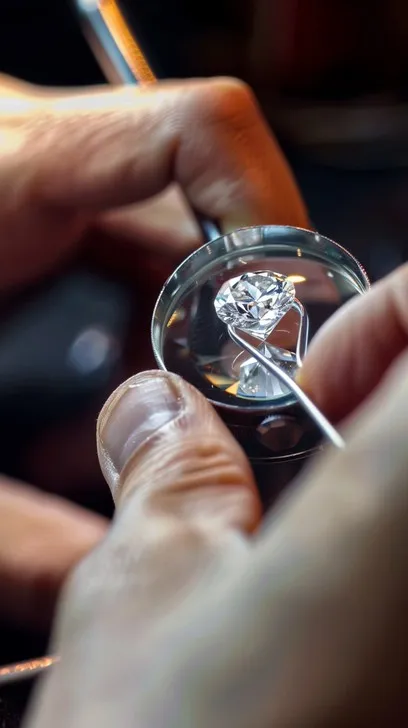
Photo: gemologist examining diamond with loupe and tweezers, via images.stockcake.com
The Call Comes In Weeks Before the Single
Somewhere in a quiet office — think velvet-lined trays, a microscopes, and a coffee mug that says something like "Certified" — a gemologist gets a call from a manager they can't name, about a stone they can't discuss, for an artist whose album isn't even announced yet. The request is simple: verify it, value it, and have the paperwork ready before the world finds out.
Welcome to the invisible first step of nearly every major pop moment. Long before the lead single hits streaming and long before the stadium dates go on sale, a small circle of appraisers and gemologists does the unglamorous work that makes the glamour possible. They are, in every sense that matters, the first people to touch an era.
Why an Appraisal Is a Business Document, Not a Receipt
Fans see a diamond and think bling. A label sees a diamond and thinks asset. That's the gap these whisperers live in.
A proper appraisal sets the insured value of a piece, which matters enormously when a seven-figure choker is getting shipped to a video shoot in the desert or worn on stage in front of 60,000 people. Insurers want documentation. Touring companies want riders. Estates want valuations. And when a piece is being loaned for a magazine cover or a Super Bowl halftime moment, everybody wants a paper trail that says exactly what it is and what it's worth.
"An appraisal isn't a flex," one veteran gemologist told us, on the condition of anonymity. "It's a contract. It's what happens if the worst-case scenario shows up in the middle of a tour."
The Pre-Stage: When the Stone Arrives Before the Song
Here's where it gets interesting. Some artists — or more often, their stylists and managers — bring appraisers in before a purchase is even finalized. The appraiser might evaluate a candidate stone, flag treatments or questionable origin paperwork, and quietly steer the buyer toward something cleaner.
Other times, the appraiser's job is pure theater-adjacent logistics. A piece needs to be photographed for the rollout, measured for a custom setting, sized for a specific hand that will hold it up in the album artwork. Timing is everything: the appraisal has to be done, documented, and locked down before the first teaser post, because once the internet sees the ice, the clock starts ticking on copycats, rumors, and insurance questions.
One appraiser described it as working "backwards from the drop." The release date is fixed; the appraisal calendar arranges itself around it.
Discretion Is the Entire Job
These aren't people doing interviews or posting client selfies. In fact, the best-known appraisers in this world are known precisely because they say nothing. NDAs are standard. Client lists are fictional. Some won't even confirm which cities they fly to.
And they do fly. When an artist is holed up in a studio compound or rehearsing for a tour, the appraiser often comes to them — sometimes on the same private planes, sometimes with a security escort and a case that gets its own seat. The logistics can be absurd: a valuation appointment at 2 a.m. after a session, a hand-delivered report to a manager's hotel suite, a stone examined under hotel lighting because that's the only light available.
The discretion isn't just about privacy. A leaked valuation can distort a negotiation, invite theft attempts, or spark tabloid stories that derail a carefully built narrative. Silence is a professional service, and it's billed accordingly.
How One Appraisal Can Shape an Entire Rollout
Consider the chain reaction. A verified, insured, appraised piece becomes safe to feature in a music video. That video becomes the visual identity of the album. The insurance file makes it possible to tour with the piece. The documented provenance makes it loanable for award shows, which generates press, which feeds the rollout.
Pull one thread and the whole thing wobbles. That's why labels and management teams treat appraisers like they treat entertainment lawyers — as essential infrastructure, not accessories.
There's also the image angle. As fans have gotten savvier about sourcing and ethics, documentation of origin — natural versus lab-grown, conflict-free certification, traceability — has become part of an artist's public story. An appraiser's report is often the difference between a reveal that lands as aspirational and one that lands as a controversy.
The Quiet Power Players
For all the sparkle, this is a small, old-school profession intersecting with the loudest industry on earth. Most of these gemologists trained through gemological institutes, spent decades grading stones for auction houses or private clients, and fell into the celebrity world through a single referral that never stopped paying dividends.
They don't trend. They don't get credit in liner notes. But every time a superstar raises a hand on stage and catches the light just right, there's a decent chance a quiet professional with a loupe signed off on it first — weeks ago, in a room nobody will ever photograph.
The spotlight never dims on this site. But it's worth remembering that somebody has to calibrate the brightness before it turns on.